

How to Master Customs Documentation for International Trade Success

The foundation of successful international trade lies in customs documentation. Customs documents provide a detailed record of goods being transported and offer essential information for customs authorities, including invoices, packing lists, import/export licenses, trade agreements, and certificates. These documents are vital for assessing duties and taxes, as well as for verifying compliance with trade regulations.

Proper customs documentation is crucial for maintaining the integrity of global trade operations. Inadequate documentation can lead to serious issues, including delays and penalties, potentially resulting in revenue loss and disruptions in the supply chain. This article aims to provide a comprehensive analysis of how to master customs paperwork, emphasizing its significance and addressing common challenges with innovative strategies.

What is Customs Documentation and Why is it Important?

Customs documentation refers to the preparation and submission of all appropriate documents for customs clearance, whether in physical or electronic form. These documents are indispensable for accurately calculating duties and taxes on cargo. They ensure that the goods comply with international trade standards and facilitate the movement of goods across borders.

Documentation requirements for customs vary based on several factors, such as the type of products, their origin, and destination. Incorrect details can affect important values like customs duties and taxes. For instance, the calculation of customs duties can vary based on the type of goods and the country of import. Below are key customs documents that most businesses require for exporting or importing goods.

Commercial Invoice

A commercial invoice contains detailed shipment information, including the description of goods, quantity, weight, volume, selling price, and packaging cost. It assists customs authorities in accurately determining insurance, delivery terms, payment, and import value.

Customs Packing List

A customs packing list is a document that details the items included in the shipment. A packing list is attached to each container shipped internationally to avoid the risk of exporting incorrect goods.

Certificate of Origin

The Certificate of Origin (COO) is issued by the exporter to declare that the goods were acquired, processed, or manufactured in the specified country.

Bill of Lading

A bill of lading is an essential legal document provided to the exporter by the carrier. It contains key details about the shipment, including type, quantity, and destination. This document acts as a receipt for the importer, allowing them to receive the shipment at its destination during customs clearance. Signatures from the carrier, shipper, and receiving party are mandatory for validation. It also helps track if any items go missing or are stolen during transit.

Import/Export Licenses

Obtaining an import/export license is essential for smooth customs operations.

Key Steps to Master Customs Documentation

Step 1: Research and Preparation

  • The rules and regulations for customs paperwork differ from one country to another.
  • Research and understand the documentation policies of the destination country.
  • Visit official government websites or contact customs clearance agents to obtain up-to-date information on required documents and prepare a checklist.
  • Ensure you have accurate details about the commodities, including their price, origin, and classification.

Step 2: Accurate Documentation

  • Accurate documentation is significant to avoid additional charges, delays, and legal issues.
  • Complete each form one by one, including commercial invoice, packing list, bill of lading/airway bill, certificate of origin, insurance certificates, and import/export license.
  • Pay attention to important details like product descriptions, HS codes, quantities, and values. Common mistakes to avoid include incorrect tariff classifications, discrepancies between documents, and omissions of critical information like signatures or dates.
  • Double-check all entries before submission, as even minor errors can lead to penalties and delays.

Step 3: Compliance and Verification

  • Compliance with customs export and import regulations is indisputable.
  • Ensure that your documentation adheres to all applicable requirements, such as export restrictions and trade agreements.
  • Stay updated on any changes in trade policies that may impact your shipments.
  • Review all documents or seek help from professional customs clearance agents for accuracy and compliance.

Step 4: Utilizing Technology

  • Technological advancements can offer numerous advantages in customs clearance.
  • With customs clearance automation, many tasks can be automated, reducing the risk of human errors.
  • Many countries allow the electronic submission of documents through online portals for seamless customs clearance.
  • Electronic documentation offers a range of benefits, including reduced costs, enhanced accuracy, faster processing times, and improved compliance with regulations.
  • Understanding certain key factors, such as tariff classification and valuation or the difference between customs duties and tariffs, can be complex.
  • Advanced tools and software can assist in calculating accurate customs duties and tariffs without the risk of human errors.

Best Practices for Efficient Customs Documentation

Organized Documentation

One of the most effective approaches to efficient customs paperwork is systematic organization. This involves systematically filling out all necessary documentation for quick access. Implementing a robust document management system can enhance the efficiency of documentation handling, resulting in faster processing, fewer delays, and no errors.

Effective Staff Training

Effective staff training on customs regulations and documentation requirements can prevent errors and improve accuracy. Regular training sessions and workshops can assist in avoiding costly delays and penalties. Effective training can also help improve the accuracy and compliance of documents.

Staying Updated

With the dynamic global trade environment, international trade rules and regulations are often updated. Visit official government sites and subscribe to receive alerts on recent updates on customs export and import regulations.

Seeking Professional Assistance

Customs paperwork involves several complexities that require more time, effort, and accuracy. Seeking professional assistance from customs brokers or trade compliance experts can be a smart approach for efficient customs paperwork. This prevents penalties and helps you manage trade compliance.

Common Challenges and How to Overcome Them

Customs paperwork comes with a set of challenges that could affect the overall operation. Following are a few common customs clearance challenges with some practical tips and strategies to overcome them.

  1. Delays due to documentation errors

Customs clearance involves numerous documentation tasks that require high precision and time. Any errors in these documents can lead to significant delays, penalties, and even legal issues. This can be prevented by having a robust review system to analyze the documents and spot the errors before submission. Consider seeking advice from a customs broker to avoid delays and penalties.

  1. Navigating complex regulations in different countries

Dealing with international trade can be incredibly complicated due to various customs import and export regulations. Trade compliance and risk management can be difficult and intimidating in many regions. Failure to comply with the specified regulations may result in legal complications, misunderstandings, delays, and even the seizure or rejection of products. For example, the risks of unlicensed agents in Dubai, UAE, might result in major legal concerns and potentially harm a company’s brand in the global market. Consulting with a professional specialist may be the best approach to handle these complexities.

  1. Managing large volumes of documents

Businesses participating in cold chain logistics and high-frequency shipments will deal with many documents. Physically managing and organizing these documents can be extremely difficult. Using technology and digital document management helps store vast numbers of documents securely in one location. These technologies enable easy access to papers, enhancing efficiency and reducing human errors. They reduce administrative burdens through streamlined operations.

Customs clearance might be the most demanding part of international trade operations. Mastering customs clearance documentation can provide a competitive edge in the global market. Efficient and precise documentation can help organizations make better decisions and ensure cross-border activities run smoothly.

How WeFreight Can Help in Effective Customs Documentation?

At WeFreight, we understand the difficulties of customs clearance documentation and offer expert customs clearance services to help businesses navigate these challenges. Our expert customs clearing agents provide specialized solutions to ensure compliance, eliminate risks, and optimize your international trade processes. By working with us, you gain access to innovative customs clearing automation and expert coaching, allowing your company to thrive in the global economy.


The Difference Between Customs Duties, Taxes, and Tariffs

Customs charges, taxes, and tariffs are critical terms in international trade. Businesses and consumers often fail to differentiate their unique functions. A proper understanding of these terminologies promotes improved business partnerships and compliance with international trade regulations. This guide explains what each term means, how it works, and how it affects both businesses and consumers, making it easier to manage the complexity of international trade.

What are Customs Duties?

Customs duties, also referred to as indirect taxes, are fees levied on commodities imported into a country and collected by the government. These charges are calculated based on the value, size, weight, and other characteristics of goods. They ensure that items comply with the customs import and export regulations, and the duties vary by country of origin and commodity.

How do Taxes Affect International Trade?

In international trade, taxes are the mandatory charges governments levy on commodities and services. These taxes apply directly or indirectly to all purchases and can be imposed on individuals and goods. They play a key role in increasing local government revenue and the customs documentation process.

Understanding Tariffs and their Impact

Tariffs are specific types of customs duties applied to imported or exported goods. Tariff classification and valuation are calculated based on the type of product determined by the HTS codes. These tariff rates can increase the cost of imported products, leading to an increased consumption of domestic products.

How Customs Duties, Taxes, and Tariffs Impact Business and Consumers?

Tariffs, taxes, and customs duties are essential elements of international trade. For businesses, these charges affect the cost of importing goods, which will directly impact overall pricing, supply chains, and profits. Consulting customs clearance agents can help you understand how customs duties are calculated and other customs clearance services. This allows businesses to plan their costs and pricing strategies. For consumers, the high cost of imported goods can affect their budgets, affordability, and purchasing decisions.

Overcoming Challenges and Utilising Opportunities

Handling customs duties, taxes, and tariffs involves several difficulties. Customs clearance challenges include complying with shifting regulations, maintaining complex documentation, the risks of unlicensed agents in KSA, and guaranteeing import/export compliance. These risks can be reduced by using customs clearance automation software, which can provide advantages like increased efficiency and accuracy. Effective trade compliance and risk management are essential to streamline the customs process.

Customs duties, taxes, and tariffs serve distinct functions in international trade. Having a proper knowledge of these concepts can improve decision-making and help businesses and consumers navigate the complexities of international trade. These components are essential for maximising trade strategy, preventing costly errors, and ensuring effective operations.

How can Al-Etaad Al-Motakamel help you manage customs duties, taxes, and tariffs more effectively?

Al-Etaad Al-Motakamel simplifies customs duty, tax, and tariff management by maintaining compliance and eliminating risks. Our skilled team handles everything from correct tariff classification and duty calculation to customs clearance, saving you time and avoiding costly delays.

Safeguard Your Business from Fraud in the Freight Forwarding Sector

In the ever-evolving landscape of global commerce, the freight forwarding industry stands as a critical nexus, enabling the seamless movement of goods across continents. However, this vital sector is not immune to the darker elements of deceit and malfeasance, where fraudsters lay in wait to exploit unwary businesses and individuals. This exploration delves into the nefarious world of freight scams, shedding light on their mechanisms, the repercussions for victims, and effective strategies to shield oneself from these predatory practices.

The Mechanics of Freight Scams

At the heart of the freight industry’s vulnerability lies a spectrum of scams, ingeniously crafted to swindle money or goods from unsuspecting victims. These fraudulent activities are particularly insidious because they often masquerade as legitimate transactions, making them harder to detect. Freight scams can manifest in various guises, from enticing offers of discounted shipping rates to more complex schemes involving counterfeit documentation or non-existent shipping services.

A common thread among these scams is the use of sophisticated communication channels—emails, phone calls, and professional-looking websites—to lend an air of legitimacy to their fraudulent operations. Victims are lured with promises of cost savings or expedited services, only to find themselves entangled in a web of deceit, facing financial losses, delayed shipments, or complete forfeiture of their goods.

Examples of Freight Scams

The freight industry, while crucial for global commerce, is also a fertile ground for sophisticated scams that prey on the unwary. Understanding the nuances of these scams can arm individuals and businesses with the knowledge to avoid falling victim to these fraudulent schemes.

1. Baiting with Low Prices

This scam begins with the allure of enticingly low shipping rates, often significantly below market value. Fraudsters use this tactic to attract customers, especially those looking to cut costs in the competitive world of international shipping. Initially, the offer seems too good to pass up, prompting victims to engage with the fraudulent forwarder. However, once the transaction progresses, a series of hidden charges begin to surface. These can range from unexpected fees for documentation, insurance, or even made-up charges for customs clearance. The final cost balloons, leaving victims financially strained and bewildered, having committed to a deal far less advantageous than initially promised. This tactic not only exploits the financial resources of the victims but also erodes trust in the freight forwarding industry.

2. Delay and Dismay

In this scenario, scammers intentionally delay the shipment of goods, concocting a variety of plausible reasons for the hold-up. These reasons might include logistical challenges, customs clearance issues, or even fictitious regulatory checks. As the delay extends, the scammers then seize the opportunity to demand additional fees to “expedite” the shipment. Desperate to receive their goods, victims often feel they have no choice but to comply, incurring unexpected costs. This tactic is particularly insidious as it preys on the victim’s urgency and desperation, turning it into a profit-making opportunity for the fraudsters.

3. The Phantom Bill of Lading

The Bill of Lading (BoL) serves as a critical document in shipping, acting as a receipt for the goods shipped, a contract between the shipper and the carrier, and a document of title that can be used to claim possession of the goods upon arrival. Scammers exploiting the absence of this document demand additional payments for its “release,” effectively holding the shipment hostage. This situation places victims in a precarious position, as without the BoL, they cannot prove ownership or secure the release of their goods. This form of extortion can lead to significant financial losses and logistical nightmares, as victims scramble to secure the release of their cargo.

4. Cargo Theft

Cargo theft involves fraudsters posing as legitimate freight forwarders who gain trust and then abscond with the cargo. This scam can be orchestrated by creating a facade of a legitimate business, complete with fake websites and official-looking documentation. Once the cargo is in their possession, the scammers disappear, selling the goods for profit. Victims are left with no recourse, facing not only the loss of their goods but also the potential impact on their business operations, reputation, and financial health. The emotional toll, combined with the financial devastation, can be overwhelming.

5. Service Misrepresentation

Promising services that do not exist, such as comprehensive insurance coverage, is another common tactic. Victims are led to believe that their shipment is protected against loss, damage, or theft, only to discover in the face of mishap that the promised service was illusory. The realization that there is no recourse or protection can be a harsh and costly lesson, leaving victims vulnerable to significant losses without the possibility of compensation.

6. The Imposter Freight Forwarder

Imposter freight forwarders are characterized by their lack of physical premises, questionable or non-existent licensing, and evasive or overly aggressive communication. These entities create an illusion of legitimacy to attract customers. Once engaged, they may disappear with the victims’ money, fail to provide the contracted services, or both. The absence of a physical office or verifiable credentials makes it challenging for victims to pursue recourse, while the lack of transparency and accountability leaves them financially and emotionally drained.

Vigilance and Due Diligence: The Key to Avoidance

Each of these scams shares a common objective: to exploit the trust and financial resources of unsuspecting victims. The best defense against these schemes is a combination of vigilance, thorough due diligence, and an insistence on transparency and documentation throughout the shipping process. By understanding the tactics used by fraudsters and remaining skeptical of offers that seem too good to be true, individuals and businesses can protect themselves against the financial and operational pitfalls of freight scams.

Safeguard your business Against Freight Scams

Protection against freight scams begins with vigilance and an informed approach. Prioritize thorough research into potential freight partners, scrutinizing their credentials, online presence, and customer feedback. Insist on comprehensive, written agreements that clearly delineate service terms, fees, and responsibilities. Tracking shipments meticulously and opting for shipment insurance can further mitigate risks, offering recourse in the event of malfeasance.

Moreover, be wary of red flags such as below-market rates, pressure to sign contracts hastily, and opaque communication. A legitimate freight forwarder will welcome scrutiny, providing transparent, detailed responses to inquiries and maintaining open channels of communication.

In the unfortunate event of falling prey to a freight scam, immediate action is crucial. Reporting the fraud to the authorities can not only aid in potential recovery efforts but also helps protect others from similar fates. Engaging with financial institutions and legal counsel can also offer pathways to recuperating losses.

In Conclusion

The freight forwarding industry, for all its significance in global trade, is not impervious to the scourge of scams. Awareness, due diligence, and a proactive stance are indispensable tools in the arsenal against fraud. By partnering with reputable, transparent, and responsive freight forwarders, businesses and individuals can navigate the complexities of global shipping with confidence and security.

For those seeking a reliable ally in their shipping endeavors, Al-Etaad Al-Motakamel emerges as a beacon of integrity and excellence. With a steadfast commitment to customer satisfaction, Al-Etaad Al-Motakamel guarantees the safe, efficient delivery of your goods, ensuring peace of mind from departure to destination. Embark on your next shipping venture with Al-Etaad Al-Motakamel, where trust and professionalism pave the way for success.


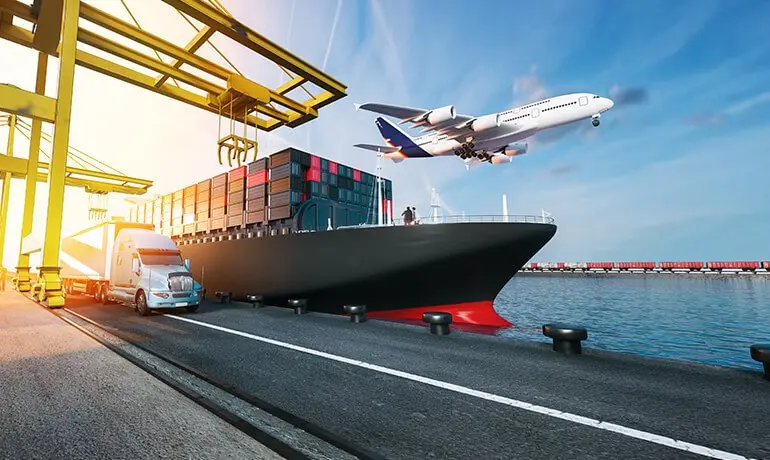
Advantages of different modes of transport in freight forwarding services

What is Air Freight?

Air freight parcel delivery refers to the transfer and shipment of goods via an air carrier, which can be either charter or commercial. While it is not the most economical option, it is advisable for certain weight-sensitive products.

Advantages

  • Fastest shipping option
  • Reliable arrival and departure times
  • Ability to send cargo almost anywhere
  • Lower insurance premiums, leading to significant savings
  • High level of security with reduced risk of theft and damage
  • Less packaging required
  • Quick customs clearance
  • Real-time tracking of cargo status

What is Sea Freight?

Sea freight, also known as ocean freight, is a method of transporting cargo from one country to another via ships or vessels. This mode is preferred when time is not a constraint, particularly for heavy or bulky shipments sent overseas economically.

Advantages

  • Suitable for products with long lead times
  • Ideal for transporting heavy and bulky goods
  • Cost-effective for large volumes
  • Lower accident rates

What is Road Freight?

Road transport is primarily utilized by suppliers and businesses for order delivery. Many transport companies offer scheduled delivery days and next-day services, depending on customer needs. Goods are typically packed in containers for efficient transport.

Advantages

  • Lower capital investment required
  • Door-to-door service
  • Access to rural areas
  • Flexible service options
  • Ideal for short-distance transport
  • Reduced risk of damage in transit
  • Acts as a feeder to other transport modes